Burst Pipe? What to Do in the First Hour
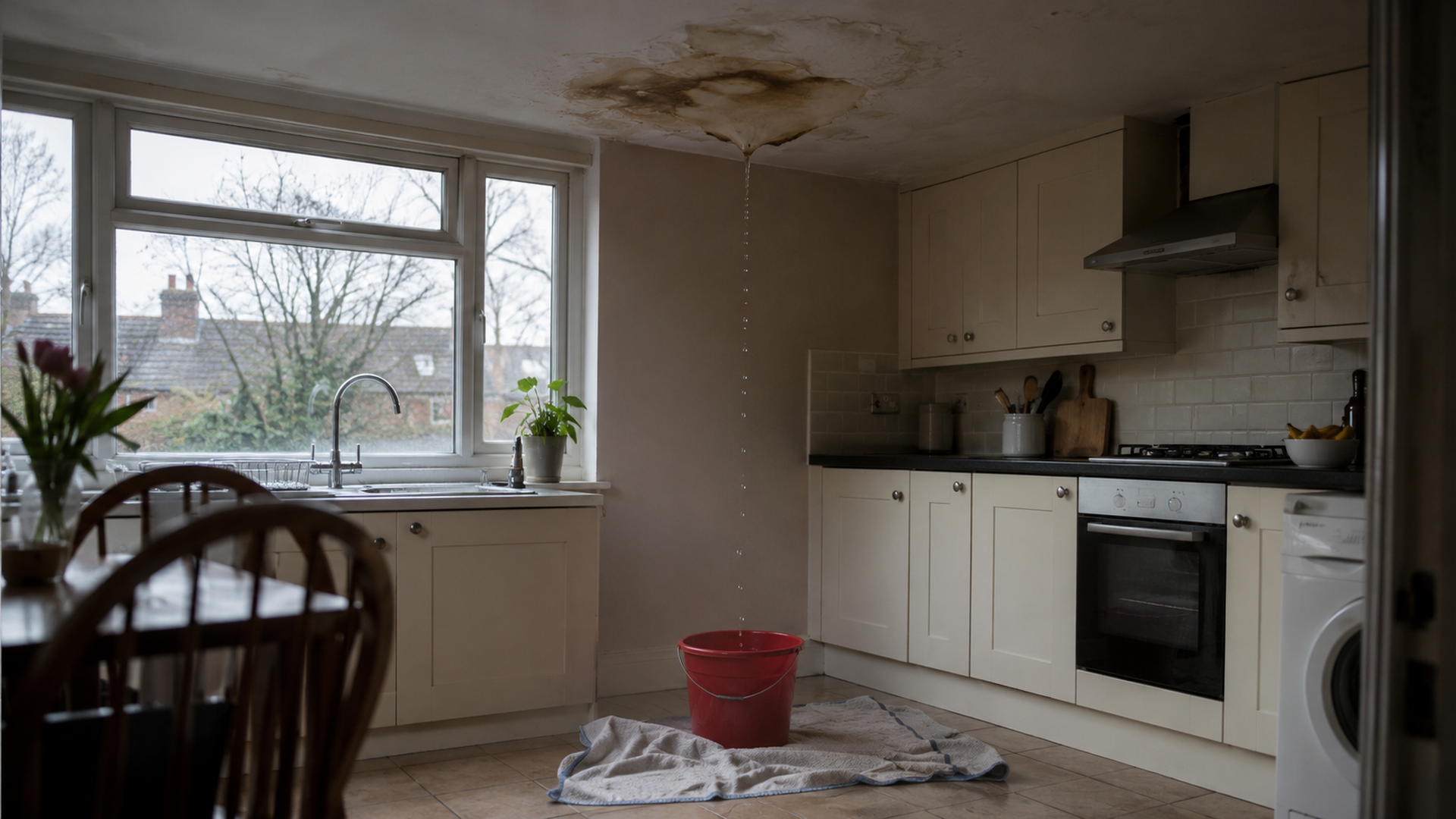
Water pouring through the ceiling is one of the most stressful things that can happen in a home or office. It also happens most in winter, when pipes freeze, crack and then burst as they thaw.
What you do in the first hour makes a big difference to how much damage you're left with. Here's a simple plan.
Step 1: Turn off the water
Find your stopcock and turn it clockwise until it stops. It's usually under the kitchen sink. It can also be in a downstairs toilet, airing cupboard, garage or under the stairs.
If you can't find it or it won't turn, look for an outside stop tap near the boundary, usually under a small metal cover. Or call your water company.
Do it now if you don't know where your stopcock is. You don't want to be looking for it with water coming through the ceiling.
Step 2: Stay safe around electrics
Water and electrics don't mix. If water is near sockets, lights or the fuse box:
- Turn the electricity off at the fuse box, but only if the fuse box is dry and you can reach it safely
- Don't touch switches or appliances with wet hands
- If the fuse box is wet, stay away from it and call an electrician
If a ceiling is bulging with water, keep out from under it. It can come down.
Step 3: Drain the system
Turn on the cold taps to drain water out of the pipes. Flush the toilets. If you have a hot water tank or a heating system, turn off the boiler or immersion heater.
Step 4: Catch the water and move your things
- Put buckets and bowls under drips
- Move furniture, electricals, rugs and paperwork out of the way
- Lift curtains and soft furnishings off the floor
- Put towels down to soak up water and protect floors
Step 5: Take photos
Before you clean up, photograph the damage and the burst pipe if you can see it. Take more photos as you go. Your insurer will want them.
Step 6: Call a plumber and your insurer
A plumber fixes the pipe. Your insurer will tell you what's covered and may want to send someone round. Many home and business policies cover sudden water leaks, but not always the pipe repair itself.
Read who pays for water leak damage. If you live in a flat, see are you liable for water damage to the flat below.
Step 7: Get it dried properly
This is the step most people underestimate. Once the leak stops, the water doesn't just disappear. It soaks into floors, walls, ceilings and insulation.
If it isn't dried properly, you can be left with:
- Mould, often within days
- Swollen or warped floors
- Damp patches and stained plaster
- Musty smells that don't go away
Opening the windows and putting the heating on usually isn't enough. Professional drying uses dehumidifiers and air movers, and moisture readings to check when it's actually dry. Read what the drying process after a flood involves.
How we help
Our team is on call 24/7. We can:
- Remove standing water with water extraction
- Dry the building with a drying programme
- Clean and sanitise affected areas
- Treat mould if it has already started
- Give you reports and photos for your insurer
See our water damage restoration service.
How to stop pipes bursting this winter
- Lag pipes in lofts, garages and outside walls
- Keep the heating on low if you go away
- Fix dripping taps, as small drips can freeze
- Know where your stopcock is, and check it turns
- Let warm air reach pipes in cupboards by leaving the doors open in a cold snap
Water coming through the ceiling right now?
Turn off the water, stay safe, then call us on 0203 826 8135. You can also email contactus@icecleaning.co.uk or get a quote today.
Related reading: flood restoration.

Why choose us?
- Cater to a wide variety of cleaning situations
- Nationwide coverage, available 24/7
- Cater to commercial and domestic clients
- Free survey provided prior to quotation
- Emergency response team
- Offer a bespoke service designed to suit all your needs
- All technicians hold professional health and safety qualifications, including BICSc, IOSH, Dewpoint Professional & Safe Contractor
We’re fully accredited
We place best practise, professional expertise and health and safety at the core of our business. We’re fully compliant with all legal obligations. You can view a list of our accreditations below, or visit our Health & Safety page for more information.