What Is Confined Space Cleaning?
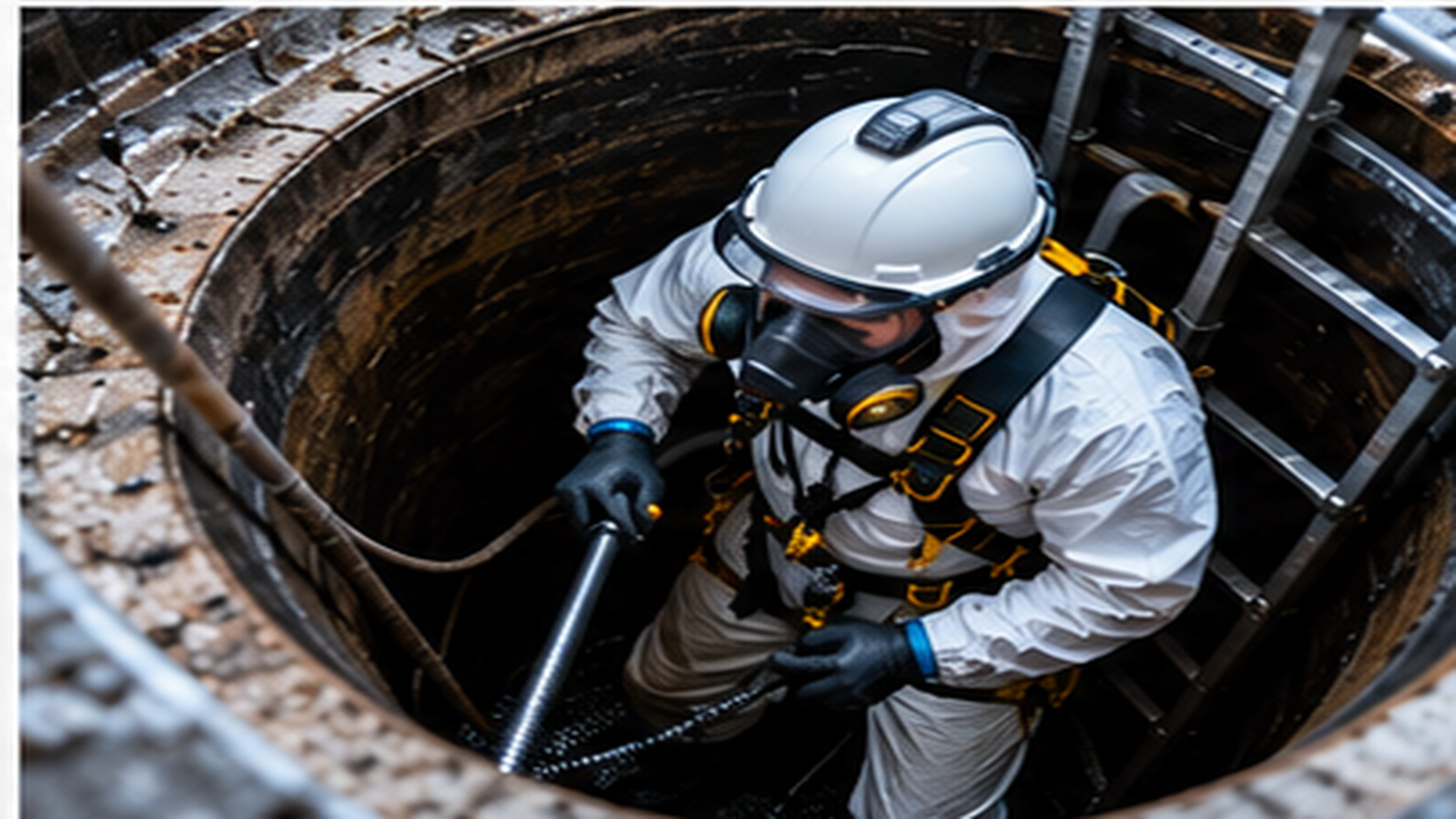
Some places are hard to get into and hard to get out of. Tanks, silos, ducts, pits and sewers all fit this description. Cleaning them is not like cleaning a room. The air can be unsafe, the space is tight, and a rescue is difficult. That is why confined space cleaning is a specialist job.
What counts as a confined space?
In the UK, the Confined Spaces Regulations 1997 describe a confined space as a place that is mostly enclosed and where there is a risk of serious harm from hazards in the space or nearby. It does not have to be small. A large tank can be a confined space if the air inside is unsafe.
Common examples include:
- storage tanks and vats
- silos and hoppers
- sewers, manholes and drains
- air ducts and flues
- pits, trenches and sumps
- boilers and furnaces
- roof voids and crawl spaces with poor air
Why confined spaces are dangerous
The main dangers are:
- Low oxygen. Rust, rotting material or some chemicals can use up oxygen in a closed space.
- Toxic gases and fumes. Gases such as hydrogen sulphide can build up and can be deadly in a short time.
- Fire and explosion. Flammable vapours can ignite from a small spark.
- Flooding. Water or liquid can rise quickly.
- Heat. Warm, closed spaces can cause heat stress.
- Hard to escape. Narrow entrances make it difficult to get out, and difficult for others to get in and help.
Many serious accidents happen when someone goes in to rescue a colleague without the right kit. That is why untrained people should never enter a confined space.
What a safe confined space clean involves
A trained team follows a strict plan.
- Risk assessment. We look at what the space is used for, what was stored in it and what could be in the air.
- Permit to work. A formal permit sets out who can enter, when and what controls must be in place.
- Isolation. Pipes, power and moving parts are shut off and locked so nothing can start or flow into the space.
- Gas testing. The air is tested before entry and checked while work goes on.
- Ventilation. Fresh air is pumped in where needed.
- Trained operatives and kit. Staff wear the right PPE, and breathing apparatus where required.
- Top-side support. A trained person stays outside, keeps in contact and can start the rescue plan if needed.
- The clean. Depending on the job, we remove sludge, waste or residue using vacuum equipment, high-pressure water or other methods.
- Handover. We check the work, remove all kit and report on what we found.
Who needs confined space cleaning?
Industrial sites, food and drink plants, water and waste sites, factories, and commercial buildings all have spaces like these. Regular cleaning keeps equipment working, helps meet hygiene rules and cuts the risk of blockages or contamination.
How to choose a contractor
Ask any contractor to show you:
- training records for their staff
- risk assessments and method statements
- their rescue plan
- gas monitoring and breathing kit
- insurance and safety records
See our health and safety page and accreditations to learn how we work.
Our confined space cleaning services
Our confined space cleaning team works safely in tight and hard-to-reach areas. We also provide duct cleaning and wider industrial cleaning across the UK.
Need a confined space cleaned?
ICE Cleaning works day and night, 365 days a year. Call us on 0208 066 0360 or email contactus@icecleaning.co.uk and tell us about the space. We will explain how we can do the work safely.

Speak with me today,
I’m here to help
By asking you a few questions either via phone or email I can immediately provide a realistic estimation of the cost.

Why choose us?
- Cater to a wide variety of cleaning situations
- Nationwide coverage, available 24/7
- Cater to commercial and domestic clients
- Free survey provided prior to quotation
- Emergency response team
- Offer a bespoke service designed to suit all your needs
- All technicians hold professional health and safety qualifications, including BICSc, IOSH, Dewpoint Professional & Safe Contractor
We’re fully accredited
We place best practise, professional expertise and health and safety at the core of our business. We’re fully compliant with all legal obligations. You can view a list of our accreditations below, or visit our Health & Safety page for more information.