Chimney Fires: Warning Signs and What to Do After One
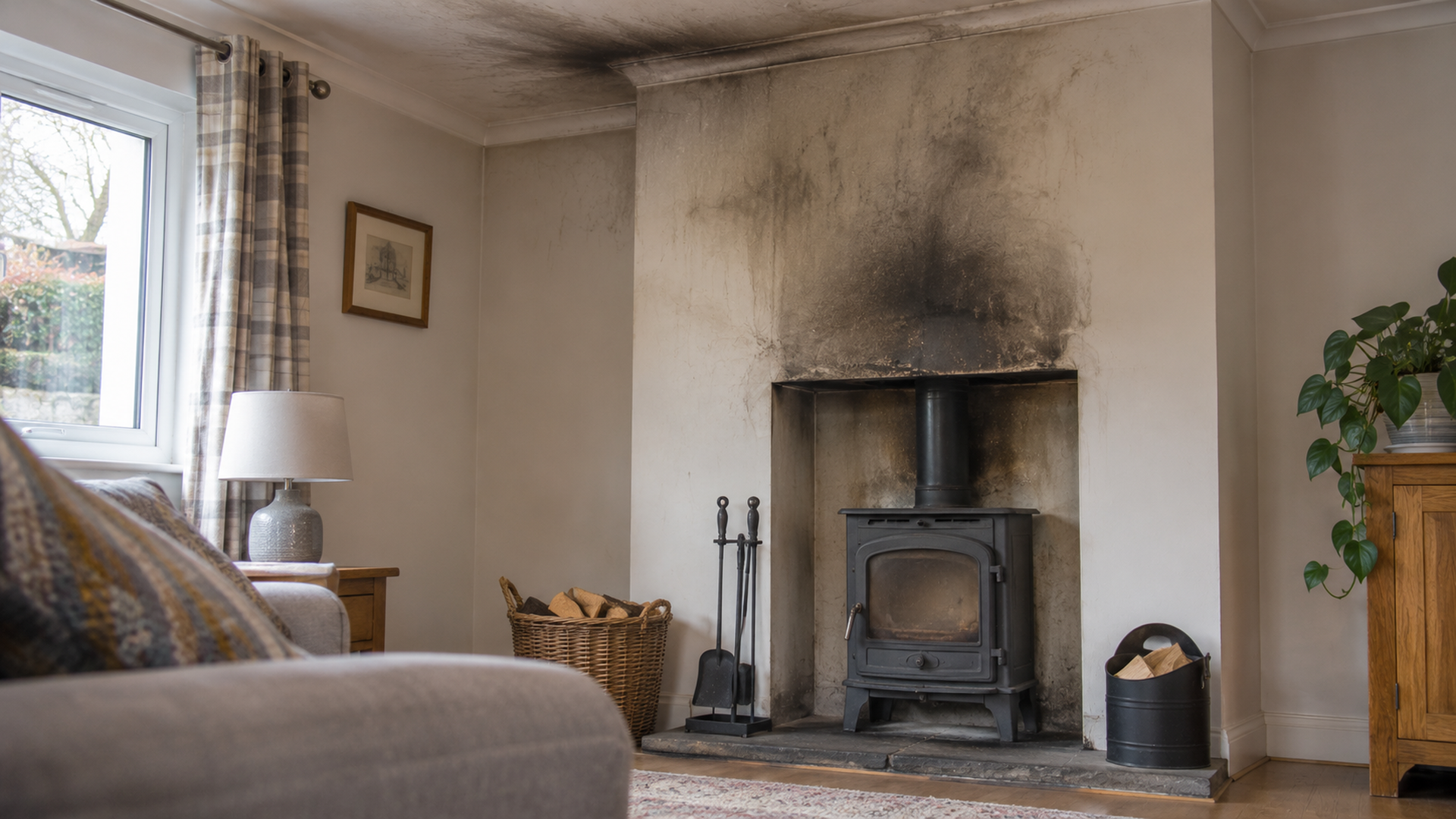
Nothing beats a real fire on a cold evening. But open fires and wood burners come with a risk most people don't think about until it happens: a chimney fire.
HETAS, the body that oversees solid fuel safety, says around 40% of chimney fires happen between January and March. So now is the time to get ready.
Here's how to spot one, what to do if it happens, and how to deal with the mess afterwards.
What causes a chimney fire?
When you burn wood or coal, soot and a sticky tar called creosote build up inside the chimney. Over time they line the flue. If they get hot enough, they catch fire.
Common causes include:
- Not sweeping the chimney often enough
- Burning wet or unseasoned wood
- Letting a stove smoulder overnight or for long periods
- A stove that's too big or too small for the room
- Burning rubbish, cardboard or wrapping paper
Warning signs of a chimney fire
- A loud roaring or rumbling sound, like a train or jet engine
- Lots of thick smoke coming from the chimney pot
- Flames or sparks shooting out of the top of the chimney
- A strong, hot smell
- The chimney breast feeling very hot to the touch
- Burning bits of soot falling into the fireplace
Some chimney fires are slow and quiet, so you might not notice them. Signs afterwards include flakes of burnt creosote in the fireplace, cracked flue tiles or a damaged chimney pot.
What to do if you have a chimney fire
- Call 999. Ask for the fire service.
- Get everyone out of the house.
- If it's safe, shut the stove door and air vents, or close the fireplace off, to starve the fire of air.
- Don't throw water on the fire in the grate. It can cause steam and crack a hot flue.
- Move furniture and rugs away from the fireplace, but only if it's safe to do so.
- Don't go back in until the fire service says it's safe.
After a chimney fire
Once the fire is out, there's usually more damage than you can see.
Get the chimney checked
Don't use the fire again until a chimney sweep or HETAS-registered installer has checked the flue. The heat can crack the liner and brickwork, which can let smoke or carbon monoxide into the house.
Deal with the soot and smoke
Soot is oily and acidic. It stains walls, ceilings, furniture and fabrics, and the smell gets into everything. Trying to wipe it off with water often smears it and makes it worse.
Read how to clean soot off walls and why your house still smells after a fire.
For anything more than a small area, professional cleaning is quicker and safer. Our smoke damage cleaning team removes soot from surfaces, cleans contents and deals with the smell. Our fire damage cleaning covers the wider clean-up.
Watch for water damage
If the fire service used water, floors, carpets and walls may be wet. If they aren't dried properly, mould can follow. Our drying programmes help prevent that.
Talk to your insurer
Take photos before you clean anything. Most home insurance covers fire damage, but check your policy. See what home insurance covers in a fire. We can provide reports and photos to support your claim.
How often should a chimney be swept?
Fire service and industry guidance varies a little, but as a rule:
|
Fuel |
How often to sweep |
|---|---|
|
Wood |
At least twice a year, and up to four times a year if used a lot |
|
Bituminous coal |
Twice a year |
|
Smokeless fuel |
At least once a year |
|
Oil or gas |
Once a year |
If you're not sure, ask a registered chimney sweep.
How to prevent a chimney fire
- Get the chimney swept before you start using it each winter
- Only burn dry, seasoned wood. "Ready to Burn" labelled wood is a good choice
- Don't overload the fire or let it smoulder for hours
- Never burn rubbish, Christmas wrapping or cardboard
- Fit a smoke alarm and a carbon monoxide alarm in the room
- Keep a fireguard in front of open fires
Need help after a fire?
We clean up after fires of all sizes, from smoke-stained living rooms to full fire restoration. Our team is available 24/7. Call 0203 826 8135, email contactus@icecleaning.co.uk or get a quote today.
Related reading: fire and smoke damage.

Why choose us?
- Cater to a wide variety of cleaning situations
- Nationwide coverage, available 24/7
- Cater to commercial and domestic clients
- Free survey provided prior to quotation
- Emergency response team
- Offer a bespoke service designed to suit all your needs
- All technicians hold professional health and safety qualifications, including BICSc, IOSH, Dewpoint Professional & Safe Contractor
We’re fully accredited
We place best practise, professional expertise and health and safety at the core of our business. We’re fully compliant with all legal obligations. You can view a list of our accreditations below, or visit our Health & Safety page for more information.