Awaab's Law Phase 2: What Changes From 30 November 2026
Awaab's Law Phase 2 starts on Monday 30 November 2026. From that date, social landlords in England must deal with more than damp and mould within fixed deadlines. Excess cold, excess heat, falls, fire, electrical hazards, explosions, structural collapse and domestic hygiene are now covered too.
This guide sets out what has changed, what stays the same and what to do before your next report comes in.
In short:
- Phase 2 starts on 30 November 2026.
- It adds seven more hazard types to the law.
- The deadlines from Phase 1 still apply: 24 hours for emergencies, 10 working days to investigate, 5 working days to make safe.
- A hazard now counts as "significant" if a reasonable landlord would make it safe within 15 working days.
- Damp and mould stays covered, as it has been since October 2025.
What is Awaab's Law?
Awaab's Law sets legal deadlines for social landlords to investigate and fix hazards in tenants' homes. It is named after Awaab Ishak, a two-year-old who died in 2020 after long exposure to mould in his family's social housing flat in Rochdale.
The law is being brought in over three phases:
| Phase | Start date | What it covers |
|---|---|---|
| Phase 1 | 27 October 2025 | Damp and mould hazards, plus all emergency hazards |
| Phase 2 | 30 November 2026 | Adds excess cold, excess heat, falls, fire and explosions, electrical hazards, structural collapse and domestic hygiene |
| Phase 3 | Not yet confirmed | All remaining housing hazards, apart from overcrowding |
For the full background, read our simple summary of Awaab's Law.
Which hazards does Phase 2 add?
From 30 November 2026, these hazards are covered when they pose a significant risk to a tenant's health or safety:
- Excess cold – homes that cannot be kept warm, such as a broken boiler, faulty heating or poor insulation.
- Excess heat – homes that overheat and cannot be cooled.
- Falls – falls on the level, on stairs, between levels and in the bath or shower.
- Fire and explosions – fire risks inside the home, and risks such as gas leaks.
- Electrical hazards – faulty wiring, damaged sockets or exposed cables.
- Structural collapse – parts of the building that could fall, such as ceilings, walls or balconies.
- Domestic hygiene – pests, rubbish, poor food safety facilities and poor washing or toilet facilities.
What is left out:
- Fire risks in the structure, outside walls and shared areas of blocks of flats. These are covered by the Fire Safety Order 2005 instead.
- Work to set up personal emergency evacuation plans (RPEEPs). These have their own rules.
- Overcrowding. This will not be covered in any phase.
What is the new 15 working day test?
This is the change most guides miss.
Under Phase 1, a "significant hazard" was one a reasonable landlord would "take steps to make safe as a matter of urgency". From 30 November 2026, the wording changes. A significant hazard is now one a reasonable landlord would make safe within 15 working days.
An "emergency hazard" is now one a reasonable landlord would make safe within 24 hours. The words "take steps to" have been removed.
In plain terms, the test is now about getting the home safe, not just starting work. It also matches the deadlines below: 10 working days to investigate plus 5 working days to make safe.
Awaab's Law timescales: what you must do and when
The deadlines have not changed in Phase 2. They now apply to more hazards.
| Step | Deadline |
|---|---|
| Emergency hazard: investigate and make safe | Within 24 hours of becoming aware |
| Significant hazard: investigate | Within 10 working days |
| Send the tenant a written summary | Within 3 working days of the investigation ending |
| Significant hazard: make safe | Within 5 working days of the investigation ending |
| Start further work to stop it coming back | Within 5 working days, or within 12 weeks if that is not possible |
| Finish the further work | Within a reasonable time |
Two points to note from the government guidance:
- The clock for emergency hazards starts as soon as you become aware. For other hazards, it usually starts the next day.
- These are the longest times allowed. The guidance says landlords should treat them as a maximum, not a target.
If a tenant cannot stay safely in the home while work is done, you must offer suitable other accommodation.
Does Phase 2 change anything for damp and mould?
Damp and mould stays covered in the same way. But Phase 2 matters for it more than you might think.
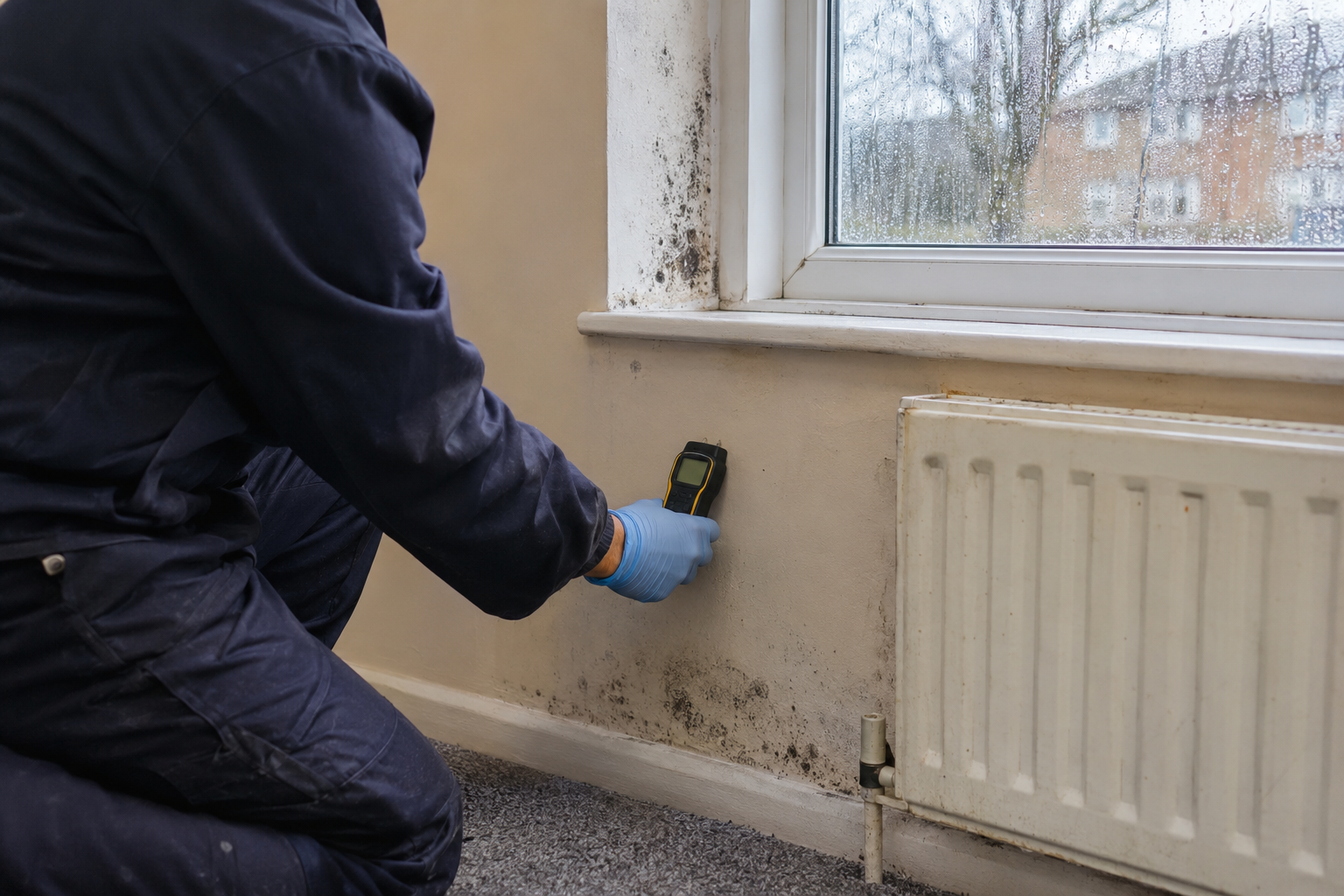
Excess cold and damp often go together. A cold home has cold walls. Cold walls cause condensation. Condensation leads to mould. So one tenant report about a broken boiler in January could now involve two covered hazards at once.
What this means in practice:
- When you inspect for damp and mould, check heating, insulation and ventilation too.
- When you fix a cold home, check for condensation and mould on outside walls, window reveals and behind furniture.
- Do not blame "lifestyle". The government guidance says it is unacceptable for social landlords to assume a hazard such as damp and mould is caused by how the tenant lives.
Temporary steps can help while you plan bigger work. The guidance gives examples such as mould treatment, a dehumidifier or a portable heater.
Who does Phase 2 apply to?
Awaab's Law applies to registered providers of social housing in England. This includes housing associations and councils that own housing.
It covers most social homes let on a tenancy, including temporary and supported housing let by a social landlord.
It does not cover:
- Shared ownership and other low-cost home ownership
- Long leaseholds
- Homes let on a licence
- Owner-occupied homes
Private landlords: Awaab's Law does not apply to private rented homes yet. The government is consulting on this until 18 December 2026, with the earliest start date in 2027. Read our guide to Awaab's Law for private landlords.
What happens if you miss a deadline?
Awaab's Law is written into every social tenancy. If you miss a deadline, the tenant can take you to court for breach of contract. The court can order you to do the work and pay compensation.
Missed deadlines can also be raised with the Housing Ombudsman and the Regulator of Social Housing.
Awaab's Law Phase 2 checklist
Use this list to check you are ready for 30 November:
- Update your triage. Make sure call handlers and repair teams can spot the new hazard types, not just damp and mould.
- Train frontline staff. Repair operatives and contractors should report any hazard they see on a visit, not just the job they were sent for.
- Check your contractors. Make sure they can meet 24-hour and 10-working-day deadlines across all covered hazards.
- Log every access attempt. Record each call, email and visit. You will need this if a tenant does not let you in.
- Take photos before work starts. The guidance recommends photos or samples, such as mould spore samples, as evidence.
- Use a written summary template. The Phase 2 guidance includes a draft template. Send it within 3 working days.
- Plan for winter. Broken heating is more severe in cold months. Expect more excess cold and damp reports from now until spring.
- Review your policy. Publish how you will handle Awaab's Law reports so tenants know what to expect.
How ICE Cleaning helps social landlords meet Awaab's Law
We work with councils, housing associations and managing agents across London, Kent, Essex and the rest of the UK. Our technicians find the cause of a hazard and tell you how to stop it coming back.
We help with:
- Damp and mould surveys – moisture readings, thermal imaging and a clear written report you can use as evidence. Book a damp and mould survey.
- Mould remediation – safe removal and treatment of mould in occupied homes. See our social housing mould remediation service.
- Mould testing and air sampling – lab-tested evidence of what is in the air. See mould testing and air sampling.
- Leak detection – finding hidden leaks that cause damp. See landlord leak detection.
- Domestic hygiene hazards – hoarder cleaning, pest control and sewage clean-up, now covered by Phase 2.
We are available 24 hours a day, 365 days a year, and can reach an emergency within hours.
Need help meeting Awaab's Law deadlines? See our Awaab's Law compliance service or call 0203 826 8135 to book a survey.
Awaab's Law Phase 2 FAQs
When does Awaab's Law Phase 2 start? Phase 2 starts on 30 November 2026. The regulations were approved by both Houses of Parliament and made on 13 November 2026.
What hazards are added in Phase 2? Excess cold, excess heat, falls, fire and explosions, electrical hazards, structural collapse and domestic hygiene. Damp and mould and all emergency hazards stay covered from Phase 1.
Have the Awaab's Law timescales changed in Phase 2? No. You still have 24 hours for emergency hazards, 10 working days to investigate a significant hazard and 5 working days after that to make it safe. What has changed is the definition of a significant hazard, which now uses a 15 working day test.
When is Awaab's Law Phase 3? No date has been confirmed. Phase 3 will cover all remaining housing hazards, apart from overcrowding.
Does Awaab's Law Phase 2 apply to private landlords? No. Awaab's Law only applies to social landlords for now. The government is consulting on extending it to private rented homes, with the earliest start in 2027.
Does Awaab's Law apply in Scotland or Wales? Awaab's Law in this form applies to England. Scotland has its own version. Check the Scottish and Welsh Government guidance for homes there.

Speak with me today,
I’m here to help
By asking you a few questions either via phone or email I can immediately provide a realistic estimation of the cost.

Why choose us?
- Cater to a wide variety of cleaning situations
- Nationwide coverage, available 24/7
- Cater to commercial and domestic clients
- Free survey provided prior to quotation
- Emergency response team
- Offer a bespoke service designed to suit all your needs
- All technicians hold professional health and safety qualifications, including BICSc, IOSH, Dewpoint Professional & Safe Contractor
We’re fully accredited
We place best practise, professional expertise and health and safety at the core of our business. We’re fully compliant with all legal obligations. You can view a list of our accreditations below, or visit our Health & Safety page for more information.